
The True Cost of Parking Chaos
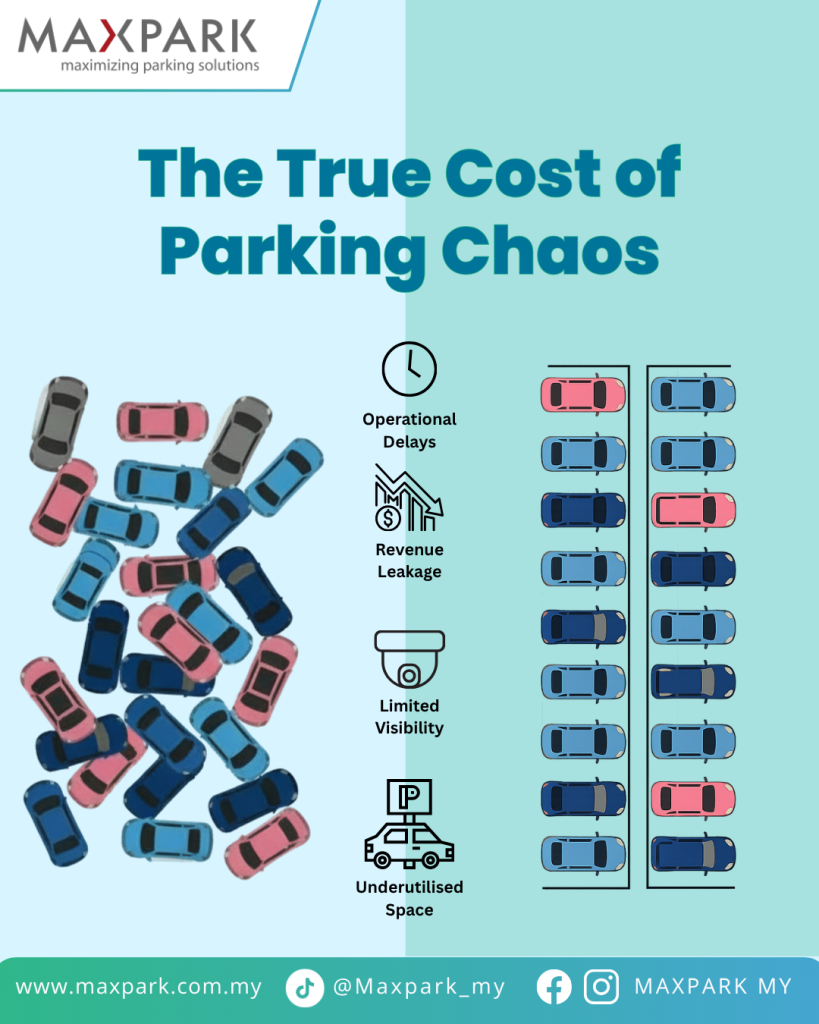
For property owners, developers, and asset managers, parking is often seen as a supporting facility — something that simply needs to function. However, in reality, parking plays a far more critical role in the overall performance of a property.
When parking is not properly managed, it doesn’t just create minor inconveniences. It quietly becomes a source of operational inefficiency, reduced capacity, and lost revenue. Over time, these issues compound, affecting not just the car park itself, but the entire ecosystem of the property.
Understanding the true cost of parking inefficiency is the first step toward turning it into a valuable, high-performing asset.
Inefficient Flow Limits Capacity
One of the most immediate impacts of poor parking management is reduced vehicle flow.When entry and exit processes are slow, or when internal circulation is unstructured, vehicles spend more time than necessary moving through the car park. This creates bottlenecks, especially during peak hours, and limits how many vehicles your facility can handle at any given time.
For owners, this translates directly into reduced throughput. Even if your car park has sufficient physical capacity, inefficient flow prevents you from maximizing its usage.
Over time, this means:
- Fewer vehicles served per day
- Longer turnaround times for each parking bay
- Congestion that affects surrounding areas of the property
In essence, your parking facility is operating below its true potential.
Underutilized Space Reduces Value
A parking facility is only as valuable as its utilization.Without proper systems in place, it becomes difficult to monitor which areas are full, which are underused, and how spaces are being occupied throughout the day. This often results in uneven distribution — some sections are overcrowded while others remain empty.
For property owners, this lack of visibility leads to missed opportunities.
Instead of optimizing every available space, you end up with:
- Inefficient allocation of parking bays
- Inability to identify peak usage patterns
- Difficulty planning improvements or expansions
What should be a fully utilized asset becomes an underperforming one.
Revenue Leakage Goes Unnoticed
Parking inefficiency doesn’t just affect operations — it directly impacts revenue. In systems that rely on manual processes or lack proper tracking, small gaps can lead to consistent revenue leakage. Unrecorded entries, payment inconsistencies, and lack of real-time monitoring all contribute to income that is never captured. These losses may seem minor on a daily basis, but when accumulated over weeks, months, and years, they become substantial.
For owners and operators, this means:
- Inaccurate revenue reporting
- Limited control over collections
- Reduced return on investment for the parking facility
Without a structured system, it becomes nearly impossible to ensure that every transaction is accounted for.
Lack of Visibility Limits Decision-Making
Data is essential for managing any modern asset effectively — and parking is no exception. When owners lack access to real-time information and detailed reporting, decision-making becomes reactive rather than strategic. Instead of anticipating demand or identifying inefficiencies early, issues are only addressed after they escalate.
This lack of visibility affects:
- Planning for peak periods
- Understanding user behavior and trends
- Optimizing pricing or access strategies
Without clear insights, managing a parking facility becomes guesswork rather than informed management.
Operational Inefficiencies Affect the Entire Property
Parking is not an isolated function — it is deeply connected to the overall performance of a property. As the primary entry and exit point for vehicles, the efficiency of your parking system directly influences how smoothly the rest of the property operates. Delays, congestion, and disorganization in the car park can ripple into other areas, affecting tenants, visitors, and daily operations.
For commercial properties, this can impact tenant satisfaction and business activity. For residential developments, it affects accessibility and daily convenience.
In both cases, inefficient parking reduces the overall effectiveness of the property as a whole.
Why Smart Parking Management Is Essential
As properties evolve, so must the systems that support them. Traditional parking methods are no longer sufficient to meet the demands of modern developments.
A smart parking management system provides the structure, visibility, and control needed to transform parking operations. Instead of relying on manual processes or outdated systems, owners gain access to real-time data, automated processes, and streamlined vehicle flow.
With a solution like MaxPark, property owners can:
- Optimize space utilization across the entire facility
- Improve vehicle throughput and reduce bottlenecks
- Ensure accurate tracking of every entry and exit
- Access detailed reporting for better decision-making
Parking shifts from being a passive facility to an actively managed asset.
Turning Parking Into a High-Performing Asset
The difference between a poorly managed car park and a well-optimized one is significant. When parking is structured, monitored, and efficiently managed, it contributes positively to the overall performance of the property. It supports smoother operations, maximizes capacity, and ensures that every available resource is used effectively.
For property owners, this means greater control, improved efficiency, and stronger long-term value.
From Inefficiency to Control
Parking inefficiency is not just a minor operational issue — it is a business challenge that directly affects performance and profitability.
By implementing a smart solution like MaxPark, property owners can eliminate inefficiencies, regain control, and unlock the full potential of their parking facilities.
Because when parking operates efficiently, the entire property benefits.
Conclusion
Parking inefficiency is often overlooked, but its impact on operations, capacity, and revenue is significant. What may appear to be a small part of a property can quietly influence overall performance in ways that owners cannot afford to ignore.
By recognising parking as a critical asset rather than just a supporting facility, property owners can take a more strategic approach to its management. With the right systems in place, parking can operate efficiently, maximise utilisation, and contribute positively to the property’s long-term value.
Solutions like MaxPark enable owners to move from reactive management to full control — ensuring that every space, every movement, and every transaction is optimised.
In today’s competitive landscape, efficient parking is no longer optional. It is essential to running a high-performing, future-ready property.
Get an appointment
MAXPARK PARKING SOLUTIONS

Products
Solutions
Solutions
- Cashless Parking System - Touch 'N Go & PayWave
- Parking Guidance System (PGS)
- Vehicle Counting System (VCS)
- Discount Validator System