
4 Reasons Why Parking Is One of the Most Underrated Urban Challenges
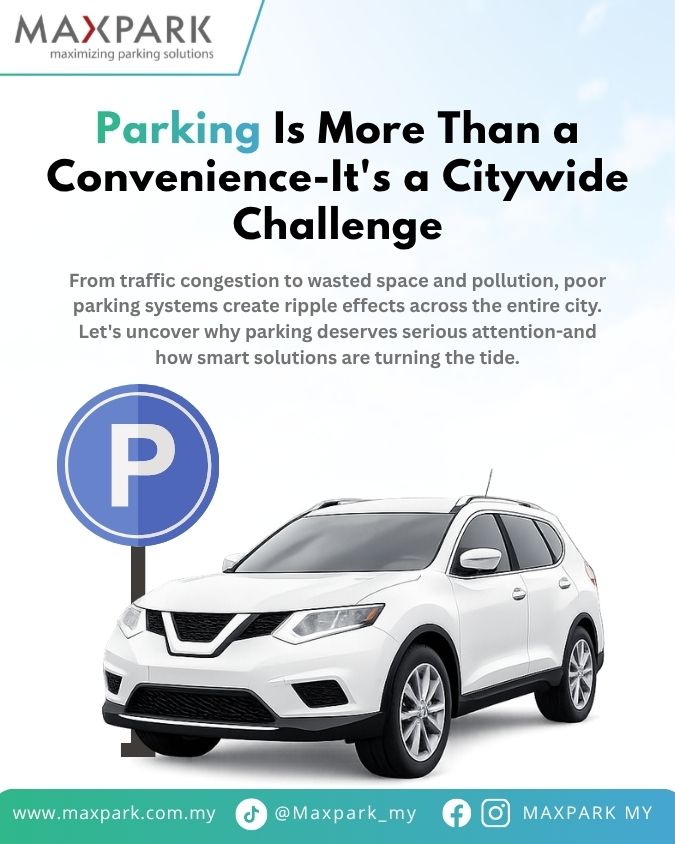
4 Reasons Why Parking Is One of the Most Underrated Urban Challenges
As cities race toward becoming smarter, more connected, and sustainable, the focus often falls on public transport, green initiatives, housing, and digital infrastructure. Yet, one critical challenge continues to be overlooked—parking.
Despite being a fundamental part of urban mobility, parking is often treated as a secondary concern in city planning. This oversight creates ripple effects that impact traffic flow, economic activity, environmental sustainability, and overall urban efficiency.
As urbanization continues to accelerate, it’s time to rethink parking—not as a basic utility, but as a strategic component of smart city development.
1. Parking Wastes Time and Increases Traffic Congestion
One of the most immediate consequences of inefficient parking systems is time loss. A significant portion of urban traffic is caused by drivers searching for available parking spaces.
Vehicles circulating in search of parking not only delay individual journeys but also contribute to overall congestion. This leads to longer travel times, higher fuel consumption, and increased emissions—placing unnecessary strain on city infrastructure.
With MaxPark’s smart parking solutions, real-time data and intelligent systems help guide drivers directly to available spaces, reducing traffic build-up and improving overall flow.
2. Inefficient Parking Systems Limit Revenue Potential
Parking is more than just a convenience—it is a valuable economic asset. Poorly managed parking systems often result in underutilized spaces and missed revenue opportunities.
Without real-time visibility, available parking spots may remain empty while drivers struggle to find them. At the same time, traditional systems relying on manual processes and cash payments increase operational costs and inefficiencies.
MaxPark enables smarter revenue management through automated systems, digital payments, and dynamic pricing models—allowing operators to maximize occupancy and unlock new income streams while reducing operational burdens.
3. Parking Has a Hidden Environmental Impact
The environmental impact of parking is often underestimated. Vehicles searching for parking contribute significantly to fuel consumption and carbon emissions.
Additionally, conventional parking infrastructure—such as large asphalt lots—can contribute to urban heat, reduce green spaces, and worsen drainage issues.
MaxPark addresses these challenges by optimizing parking efficiency through smart technology. By reducing unnecessary driving and enabling better space utilization, our solutions support more sustainable urban environments. Integration with EV charging and energy-efficient systems further aligns parking with green city initiatives.
4. Parking Impacts Everyone—Yet Is Often Overlooked
Parking affects nearly every urban resident—whether as a driver, commuter, or business owner. Despite this, it remains one of the least prioritized aspects of urban planning.
When parking systems function smoothly, they go unnoticed. But when they fail, the impact is immediate—causing frustration, delays, and inefficiencies across the board.
Parking should no longer be seen as a passive infrastructure element. Instead, it must be recognized as a critical connection point between mobility, urban planning, and user experience.
Building Smarter Cities Starts with Smarter Parking
Modern challenges require modern solutions. With advancements in AI, IoT, and cloud-based technologies, parking can now be managed more intelligently than ever before.
MaxPark’s smart parking ecosystem offers:
- Real-time parking availability tracking
- Seamless, cashless payment systems
- Dynamic pricing for optimized revenue
- Data-driven insights and reporting
- Integration with broader smart city infrastructure
By leveraging these technologies, operators and city planners can improve efficiency, enhance user satisfaction, and make more informed decisions based on real data.
Conclusion
Ignoring parking in urban development is no longer sustainable. The effects of inefficient parking extend far beyond inconvenience—they influence traffic, business performance, environmental impact, and overall city livability.
With MaxPark, parking becomes more than just a necessity—it becomes a strategic advantage.
By prioritizing smart parking solutions, cities and operators can unlock better mobility, stronger economic performance, and a more sustainable future.
Get an appointment
MAXPARK PARKING SOLUTIONS

Products
Solutions
Solutions
- Cashless Parking System - Touch 'N Go & PayWave
- Parking Guidance System (PGS)
- Vehicle Counting System (VCS)
- Discount Validator System