
Smart Parking: Zero Stress, Smarter Parking Experience
Introduction
Parking is often one of the first and last experiences a visitor has when arriving at a shopping mall, office building, hospital, commercial property, or other destination. When parking is slow, confusing, or inconvenient, it can affect the entire customer experience.
Smart parking technology is changing this. By combining automation, real-time monitoring, digital systems, and intelligent vehicle detection, parking facilities can become faster, easier to navigate, and more convenient for everyone.
With the right technology, parking can move from a daily frustration to a zero-stress experience.
What Is Smart Parking?
Smart parking uses connected technologies to make parking operations more efficient and user-friendly. Instead of relying entirely on traditional ticketing, manual processes, and fixed information, smart parking systems can collect data, detect vehicles, monitor parking activity, and provide useful information in real time.
The result is a more connected parking environment where technology supports both drivers and parking operators.
Key Features of a Smart Parking System
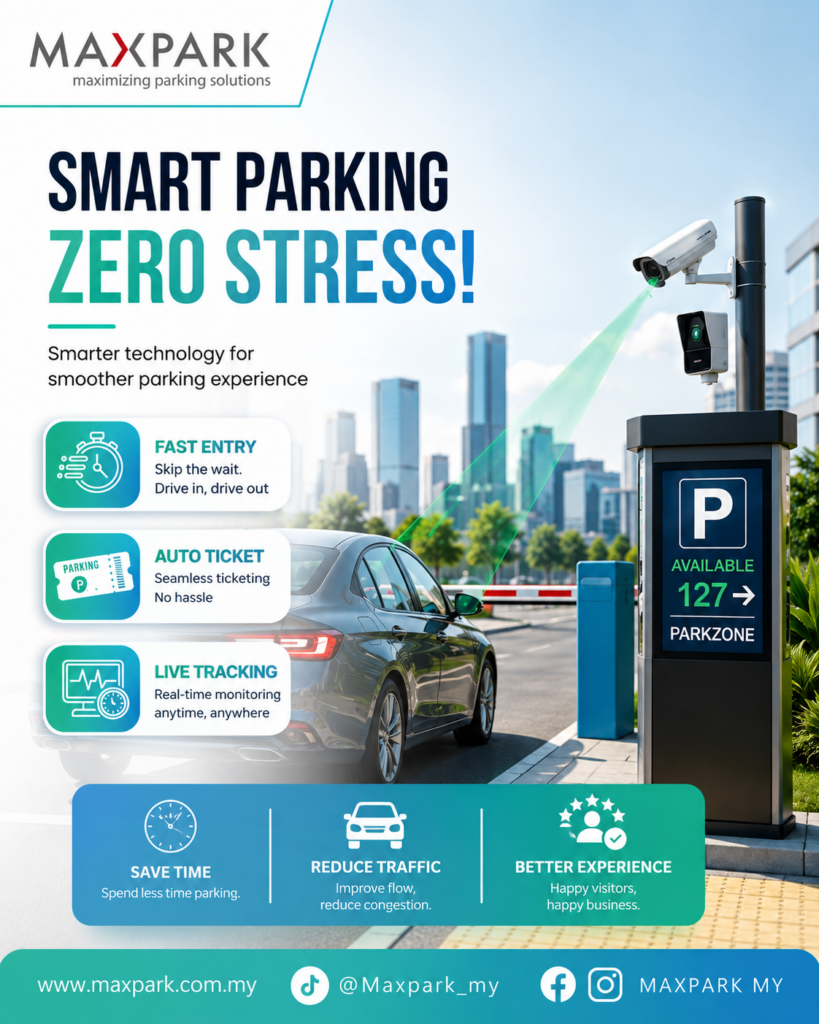
Fast Entry
One of the biggest advantages of smart parking is a faster entry process. Automated vehicle detection and access control can reduce the need for drivers to stop and complete manual procedures.
With a smoother entry experience, vehicles can move into the parking facility more efficiently, helping reduce queues and congestion during busy periods.
Auto Ticketing
Traditional parking tickets can be inconvenient. Tickets can be lost, damaged, or forgotten, creating unnecessary delays when drivers are ready to leave.
Automated ticketing provides a more seamless alternative. Depending on the parking system, vehicle information can be captured digitally, reducing the need for physical tickets and making the parking journey more convenient.
Live Tracking
Real-time monitoring gives parking operators a clearer picture of what is happening inside their facility.
Live tracking can provide information about parking activity, occupancy, vehicle movement, and system performance. This allows operators to respond more quickly to operational issues and make better decisions based on current information.
How Smart Parking Improves the Driver Experience
Less Time Spent Parking
Nobody wants to spend unnecessary time searching for parking, waiting at an entrance, or completing complicated payment procedures.
Smart parking helps streamline these processes so drivers can spend less time dealing with parking and more time focusing on their actual destination.
Easier Navigation
Parking facilities can become confusing, particularly when they are large or busy. Smart parking technology can provide information that helps drivers understand parking availability and navigate the facility more efficiently.
This can reduce unnecessary driving within the car park and create a smoother journey from entrance to parking space.
Smoother Exit
The parking experience does not end when a driver returns to their vehicle. A smart system can help simplify the exit process through automated vehicle recognition, digital payment, and automated access control.
A smoother exit means less waiting and fewer bottlenecks at peak times.
Benefits for Parking Operators
Better Traffic Flow
Smart parking systems can help improve the movement of vehicles throughout a parking facility. Faster entry and exit processes can reduce congestion and improve the overall flow of traffic.
Real-Time Visibility
Live monitoring provides operators with greater visibility into parking operations. Instead of relying only on manual observations or delayed reports, operators can access current information to support faster decision-making.
Improved Parking Management
Data generated by smart parking systems can help operators understand how their facilities are being used. This information can support better planning, resource allocation, maintenance, and operational management.
Better Customer Satisfaction
A smooth parking experience can have a direct impact on how visitors perceive a property or business. When customers can enter easily, find parking, and leave without unnecessary delays, the overall experience becomes more positive.
Smart Parking and Reduced Traffic
Parking congestion is not only frustrating for drivers; it can also affect traffic flow around a property.
When vehicles spend less time waiting at entrances, searching for spaces, or queuing at exits, unnecessary congestion can be reduced. Smart parking therefore contributes to a more organized and efficient movement of vehicles within and around parking facilities.
This can be particularly valuable for busy commercial areas where parking demand changes throughout the day.
Creating a Better Experience for Everyone
The true value of smart parking goes beyond technology itself. The objective is to create a parking environment that works better for everyone involved.
For drivers, this means less waiting, easier access, and a more convenient experience.
For operators, it means better visibility, improved control, and more efficient management.
For businesses and property owners, it can contribute to better customer satisfaction and smoother site operations.
The Future of Stress-Free Parking
As parking technology continues to develop, smart parking systems will become increasingly connected and intelligent. Technologies such as automated vehicle recognition, digital payments, real-time data, parking guidance, and advanced analytics will continue to improve the way parking facilities operate.
The future of parking is not simply about providing more spaces. It is about making every part of the parking journey faster, smarter, and easier.
Conclusion
Smart parking is transforming the traditional parking experience by combining automation, real-time information, and intelligent technology. From fast entry and auto ticketing to live tracking and smoother traffic flow, every part of the parking journey can be improved.
For drivers, the benefits are clear: less waiting, less stress, and a better overall experience. For parking operators, smart technology provides greater visibility and better tools for managing their facilities.
Ultimately, smart parking is about more than technology. It is about creating a seamless experience where parking becomes something people can simply use—without the hassle.
Smart parking. Zero stress. Better experiences.
Get an appointment
MAXPARK PARKING SOLUTIONS

Products
Solutions
Solutions
- Cashless Parking System - Touch 'N Go & PayWave
- Parking Guidance System (PGS)
- Vehicle Counting System (VCS)
- Discount Validator System