
Powering Infrastructure with Technology: MaxPark’s Smart Parking Solutions for Smarter Cities
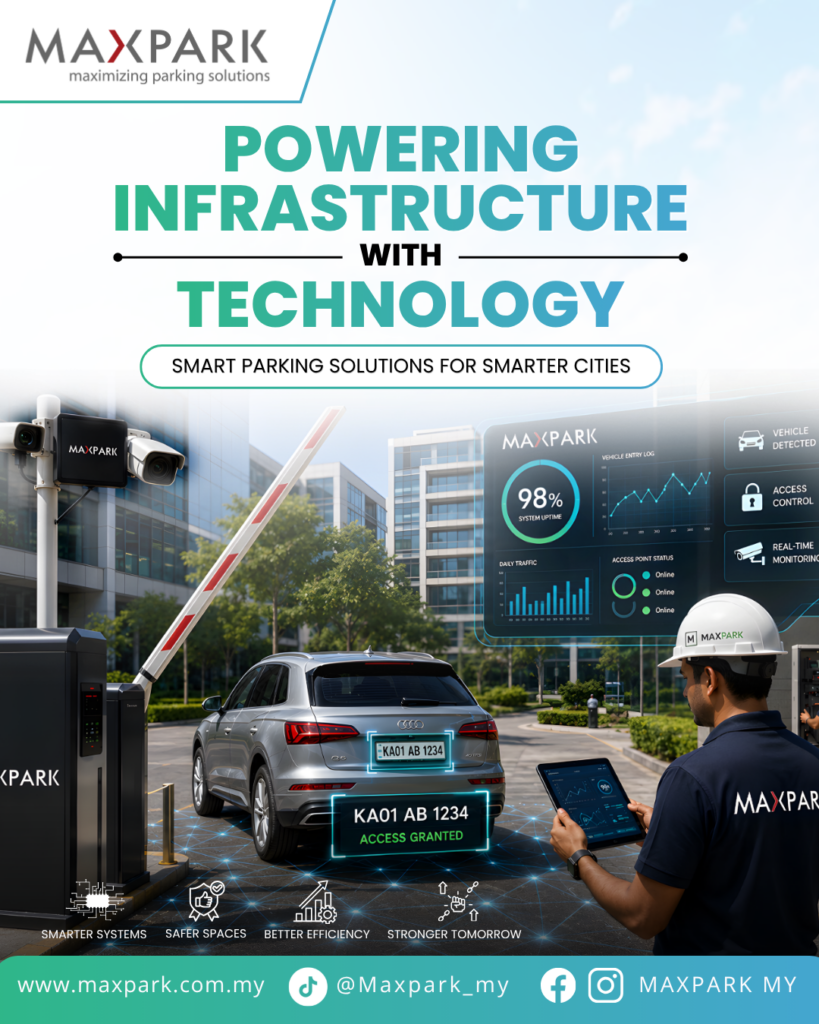
Introduction
Cities are growing faster than ever before. Urban populations are expanding, vehicle ownership is increasing, and infrastructure demands are reaching unprecedented levels. In this rapidly evolving landscape, traditional parking solutions are no longer sufficient. Cities need intelligent, technology-driven approaches that can adapt to modern challenges while building toward a sustainable future.
MaxPark’s Smart Parking Solutions represent the next generation of parking infrastructure—systems designed not just to manage parking, but to power entire cities toward greater efficiency, safety, and sustainability.
This is more than parking management. This is about building smarter cities through intelligent technology.
The Challenge: Modern Cities Need Modern Solutions
The Parking Crisis in Urban Centers
Cities worldwide face a critical parking challenge. As urbanization accelerates, the demand for parking spaces grows exponentially. Yet traditional parking infrastructure—simple lots with manual management—cannot keep pace with modern needs.
The consequences are significant:
- Traffic congestion from vehicles searching for spaces
- Environmental impact from unnecessary emissions
- Wasted time and resources for drivers and city planners
- Safety concerns from congested, poorly managed parking areas
- Economic losses from inefficient space utilization
- Poor urban planning due to lack of real-time data
Cities need solutions that go beyond simply providing more spaces. They need intelligent systems that optimize existing infrastructure, reduce congestion, and provide actionable data for better urban planning.
The Infrastructure Gap
Many cities still rely on outdated parking infrastructure:
- Manual ticketing and payment systems
- No real-time occupancy data
- Disconnected systems with no unified management
- Limited security and monitoring capabilities
- Inability to scale with growing demand
- No integration with smart city initiatives
This infrastructure gap creates inefficiencies that ripple throughout entire urban ecosystems.
The Solution: MaxPark’s Technology-Powered Infrastructure
MaxPark transforms parking from a simple operational necessity into a strategic asset that powers entire cities. By combining cutting-edge technology with intelligent design, MaxPark creates parking infrastructure that is smarter, safer, and more efficient.
Core Technology Components
MaxPark’s infrastructure is built on four pillars of intelligent technology:
1. Smarter Systems
Advanced AI and machine learning algorithms optimize every aspect of parking operations:
- Real-time traffic flow optimization
- Predictive analytics for capacity planning
- Automated decision-making for space allocation
- Continuous system learning and improvement
- Integration with city-wide smart infrastructure
2. Safer Spaces
Security and safety are embedded into every layer of MaxPark’s infrastructure:
- 24/7 surveillance and monitoring
- Automated threat detection
- Vehicle tracking and identification
- Access control and authentication
- Emergency response integration
- Data-driven safety insights
3. Better Efficiency
MaxPark maximizes the utility of existing parking infrastructure:
- Real-time occupancy monitoring
- Dynamic space allocation
- Reduced search times for drivers
- Optimized traffic circulation
- Lower operational costs
- Increased revenue generation
4. Stronger Tomorrow
MaxPark builds infrastructure designed for the future:
- Scalable architecture for growing cities
- Integration with emerging technologies
- Sustainability and environmental focus
- Data foundations for smart city initiatives
- Future-proof system design
- Continuous innovation and updates
Key Capabilities Powering Smart Cities
Real-Time Monitoring and Analytics
MaxPark’s centralized dashboard provides complete visibility into parking operations:
- 98% System Uptime – Reliable infrastructure you can depend on
- Live Traffic Monitoring – Real-time vehicle flow data
- Access Point Status – Instant visibility into entry/exit operations
- Vehicle Detection – Automatic identification and tracking
- Access Control – Intelligent permission management
- Performance Metrics – Comprehensive analytics and reporting
Facility managers and city planners have the data they need to make informed decisions.
Vehicle Recognition and Access Management
MaxPark’s License Plate Recognition technology enables seamless vehicle management:
- Automatic vehicle identification at entry points
- Instant access validation
- Secure authentication without manual intervention
- Integration with multiple access control systems
- Support for resident, visitor, and temporary access
- Audit trails for security and compliance
Integrated Management Platform
A single, unified platform manages all parking operations:
- Centralized control across multiple facilities
- Real-time communication between systems
- Automated reporting and analytics
- Integration with payment systems
- Mobile access for managers and operators
- Cloud-based accessibility from anywhere
Benefits for Cities and Communities
For City Planners and Administrators
- Data-Driven Urban Planning – Real parking data informs city development decisions
- Congestion Reduction – Fewer vehicles searching for spaces means less traffic
- Environmental Impact – Reduced emissions from optimized parking operations
- Revenue Optimization – Better utilization of parking assets
- Smart City Integration – Foundation for broader smart city initiatives
- Scalability – Infrastructure that grows with the city
For Facility Managers
- Operational Efficiency – Automated systems reduce staffing needs
- Cost Reduction – Lower operational expenses through automation
- Revenue Enhancement – Accurate billing and multiple payment options
- Maintenance Insights – Predictive maintenance capabilities
- Security Management – Enhanced monitoring and threat detection
- Performance Visibility – Real-time dashboards and reporting
For Drivers and Citizens
- Faster Parking – Reduced search time and congestion
- Better Experience – Clear guidance and seamless access
- Safety – Enhanced security and monitoring
- Environmental Benefits – Contributing to cleaner cities
- Convenience – Multiple payment options and easy access
- Reduced Stress – Less frustration from parking challenges
For the Environment
- Lower Emissions – Fewer vehicles circling parking lots
- Reduced Fuel Consumption – Optimized traffic flow
- Sustainable Infrastructure – Technology-driven efficiency
- Carbon Footprint Reduction – Measurable environmental impact
- Green City Support – Contributing to sustainability goals
Why MaxPark Powers Smarter Cities
Proven Infrastructure
MaxPark has deployed intelligent parking solutions across multiple cities and facilities, proving the effectiveness of technology-powered infrastructure. Our systems handle millions of parking transactions annually with 98% uptime reliability.
Comprehensive Technology Stack
Our integrated approach combines:
- License Plate Recognition (LPR)
- AI-powered traffic management
- Real-time occupancy monitoring
- Automated access control
- Integrated payment systems
- Centralized management platform
- Advanced analytics and reporting
Scalability and Flexibility
MaxPark’s infrastructure scales from single facilities to city-wide networks:
- Modular system design
- Easy integration with existing infrastructure
- Support for multiple facility types
- Customizable configurations
- Future-ready architecture
Commitment to Innovation
MaxPark continuously evolves to meet emerging city needs:
- Regular system updates and improvements
- Integration with new technologies
- Adaptation to changing urban requirements
- Research and development focus
- Industry leadership in smart parking
The Future of Urban Parking
As cities become smarter, parking infrastructure must evolve accordingly. MaxPark represents this evolution—technology-powered systems designed to address modern urban challenges while building foundations for future growth.
The cities that embrace intelligent parking infrastructure will enjoy:
- More efficient urban operations
- Better traffic flow and reduced congestion
- Improved air quality and environmental outcomes
- Enhanced safety and security
- Better data for planning and decision-making
- Competitive advantages in attracting residents and businesses
Conclusion
Powering infrastructure with technology isn’t just about parking—it’s about building smarter, more efficient, more sustainable cities. MaxPark’s intelligent parking solutions provide the foundation for urban centers that work better for everyone.
From real-time monitoring to automated access control, from AI-powered optimization to comprehensive analytics, MaxPark delivers the technology infrastructure that modern cities need.
The cities of tomorrow are being built today. MaxPark is powering that transformation.
Whether you’re a city planner looking to optimize urban infrastructure, a facility manager seeking operational excellence, or a community member wanting better parking experiences, MaxPark has the technology-powered solutions you need.
Get an appointment
MAXPARK PARKING SOLUTIONS

Products
Solutions
Solutions
- Cashless Parking System - Touch 'N Go & PayWave
- Parking Guidance System (PGS)
- Vehicle Counting System (VCS)
- Discount Validator System