
Parking Automation: Transforming the Modern Parking Experience
Introduction
Parking is an essential part of everyday travel, but traditional parking systems can often be slow, inconvenient, and difficult to manage. Long queues at entry points, manual ticketing, payment delays, and limited visibility of parking operations can create frustration for both drivers and parking operators.
As technology continues to transform the way businesses operate, parking automation is becoming an important solution for creating faster, smarter, and more efficient parking facilities. By combining technologies such as Automatic Number Plate Recognition (ANPR), RFID, automated barriers, parking guidance, digital payment, and real-time monitoring, modern parking systems can provide a seamless experience from entry to exit.
What Is Parking Automation?
Parking automation refers to the use of technology to manage and streamline parking operations with minimal manual intervention. Instead of relying heavily on physical tickets, cash payments, and manual checks, automated systems can identify vehicles, control access, guide drivers, process payments, and monitor parking activity digitally.
The goal is simple: make parking easier for drivers while giving operators better control and visibility.
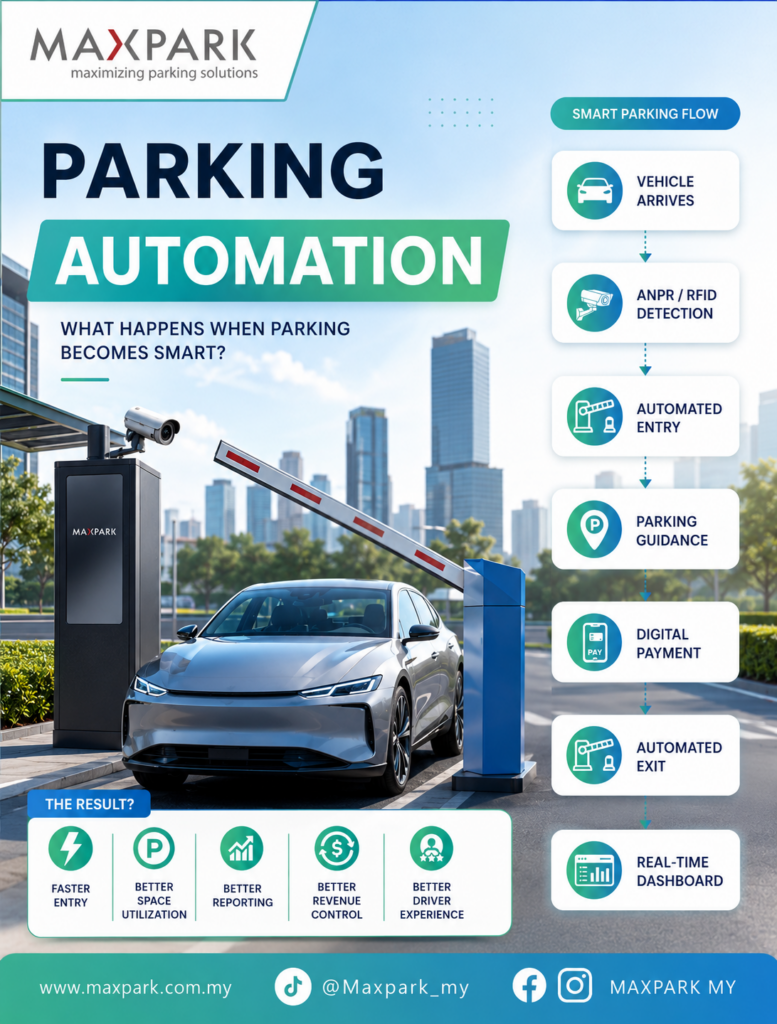
How Smart Parking Automation Works
1. Vehicle Arrives
When a vehicle approaches the parking facility, the parking system detects its arrival. Sensors and intelligent access equipment help prepare the system for automated vehicle identification.
2. ANPR / RFID Detection
Automatic Number Plate Recognition (ANPR) cameras can identify a vehicle using its registration number, while RFID technology can recognize authorized vehicles through RFID tags.
This reduces the need for drivers to stop and manually collect tickets or interact with parking staff.
3. Automated Entry
Once the vehicle has been successfully identified and authorized, the barrier can open automatically. This creates a smoother entry process and helps reduce queues during busy periods.
4. Parking Guidance
Smart parking systems can help drivers locate available parking spaces more efficiently. Parking guidance information can reduce the time spent searching for a space and improve the overall utilization of the parking facility.
5. Digital Payment
Digital payment options allow drivers to complete parking payments conveniently without relying solely on cash or physical payment counters. A smoother payment process can help reduce congestion at exit points.
6. Automated Exit
At the exit, the system can recognize the vehicle and verify its parking status or payment. Once the required conditions are met, the barrier can open automatically, allowing the driver to leave with minimal delay.
7. Real-Time Dashboard
For parking operators, automation does not end when the vehicle leaves. A real-time dashboard can provide useful operational information, including parking activity, occupancy, transactions, and system performance.
This gives operators greater visibility and helps them make better decisions based on real-time information.
The Benefits of Parking Automation
Faster Entry and Exit
Automated identification and barrier control can significantly improve traffic flow at parking entrances and exits. Drivers spend less time waiting, particularly during busy periods.
Better Space Utilization
Parking guidance and occupancy information can help drivers find available spaces more quickly while allowing operators to understand how parking capacity is being used.
Better Reporting
Digital systems can collect and organize parking data automatically. Operators can use this information to understand usage patterns, monitor operations, and improve parking management.
Better Revenue Control
Automated payment and transaction tracking can provide greater visibility over parking revenue. Digital records can also make it easier to monitor transactions and identify operational issues.
Better Driver Experience
Perhaps the most visible benefit is convenience. Drivers can experience a smoother journey with less waiting, easier access, simpler payment, and a more predictable parking process.
Why Smart Parking Matters
Modern parking facilities are expected to do more than simply provide a place for vehicles. They are increasingly becoming part of the overall customer experience of a shopping mall, office building, hospital, residential development, airport, or commercial property.
A well-designed automated parking system can help transform parking from a frustrating necessity into a seamless part of the visitor journey.
At the same time, operators benefit from improved visibility, better data, and more efficient management. This creates value for both sides of the parking experience.
The Future of Parking
The future of parking will continue to be shaped by digital technologies. As connected systems, intelligent cameras, mobile payments, data analytics, and smart-city infrastructure become more widespread, parking facilities will become increasingly integrated and automated.
The objective is not simply to remove manual processes. It is to create a parking ecosystem where vehicles, technology, operators, and drivers work together more efficiently.
Conclusion
Parking automation is changing the way parking facilities operate. From vehicle detection and automated entry to parking guidance, digital payment, automated exit, and real-time dashboards, every stage of the parking journey can be made smarter and more efficient.
For drivers, this means faster entry, easier parking, simpler payment, and a better overall experience. For operators, it means better space utilization, improved reporting, stronger revenue control, and greater operational visibility.
As parking continues to evolve alongside smart-city technology, automation will play an increasingly important role in delivering parking solutions that are efficient, connected, and designed around the needs of modern drivers.
Smart parking is more than automation—it is a better way to move.
Get an appointment
MAXPARK PARKING SOLUTIONS

Products
Solutions
Solutions
- Cashless Parking System - Touch 'N Go & PayWave
- Parking Guidance System (PGS)
- Vehicle Counting System (VCS)
- Discount Validator System