
Common Problems with Manual Parking Systems and Why Malaysian Businesses Are Switching to Smart Parking
Introduction
Parking is an important part of the customer experience for shopping malls, commercial buildings, hotels, hospitals, offices and residential developments. While many properties still rely on traditional manual parking systems, these methods can create operational challenges as traffic volume increases.
Long queues, lost parking tickets, frustrated drivers, higher manpower requirements and human error can affect both daily operations and customer satisfaction. For Malaysian businesses looking to improve efficiency and provide a smoother parking experience, smart parking technology offers a more reliable solution.
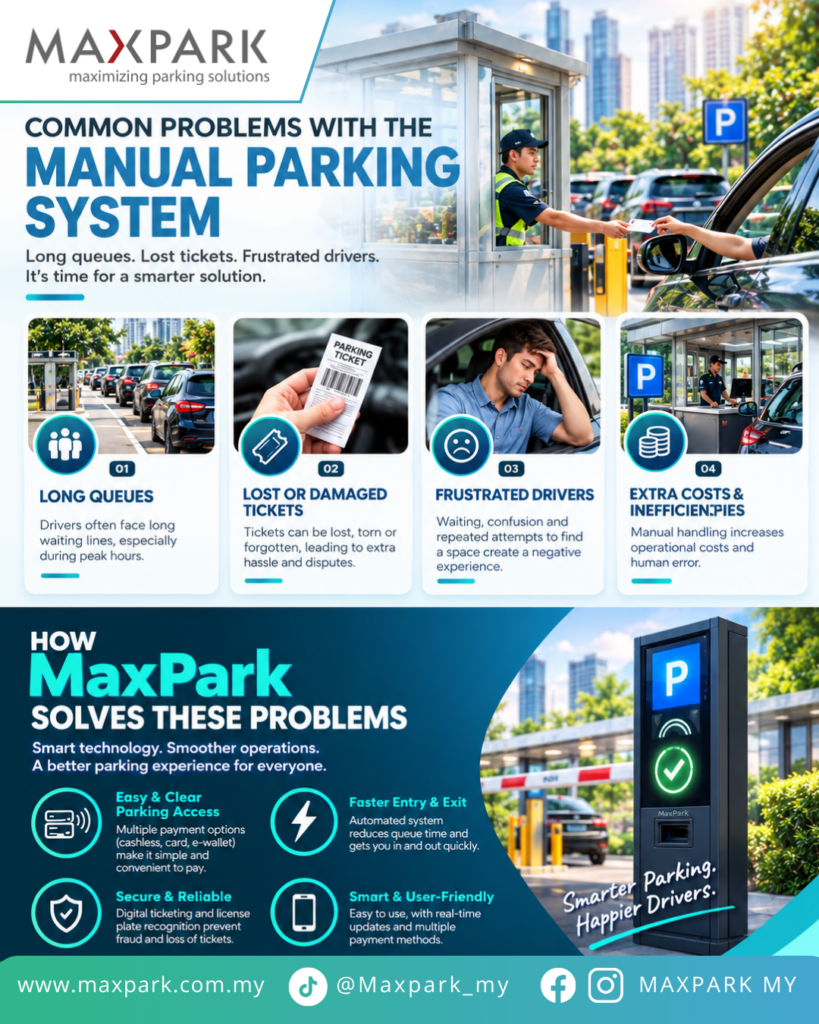
1. Long Queues at Entry and Exit Points
One of the most common problems with manual parking is long waiting times.
During peak hours, drivers may have to queue at parking entrances while staff manually issue tickets or record vehicle information. Similar delays can happen when drivers leave, particularly when payments and ticket verification are handled manually.
For busy malls, offices and commercial properties, even a few extra minutes per vehicle can result in significant congestion.
A smart parking system can automate entry and exit processes, helping vehicles move through the parking facility more quickly and reducing unnecessary queues.
2. Lost or Damaged Parking Tickets
Traditional ticket-based parking systems depend heavily on physical tickets. Drivers can easily lose, damage or forget their parking tickets, creating additional work for parking operators.
When a ticket is missing, staff may need to verify the vehicle, determine the parking duration and resolve the issue manually. This can lead to delays, disputes and an unpleasant experience for both drivers and parking staff.
Digital parking systems can reduce reliance on physical tickets by using technologies such as cashless payment, card systems and licence plate recognition.
3. Frustrated Drivers and Poor Customer Experience
Parking is often the first and last interaction a visitor has with a property.
Long queues, unclear payment procedures, difficulty finding the correct exit or repeated attempts to resolve ticket problems can quickly create frustration.
A parking facility that is difficult to use may negatively affect the overall perception of a mall, office building, hotel or other property.
Smart parking technology focuses on making the entire process simpler—from entering the car park to making payment and exiting.
4. Higher Operational Costs and Human Error
Manual parking operations often require more staff to manage ticketing, payment collection, vehicle verification and other processes.
While staff remain important for parking operations, excessive dependence on manual procedures can increase operating costs and create opportunities for human error.
Manual processes can also make it more difficult to monitor transactions and identify discrepancies.
Automated parking systems can reduce repetitive tasks and allow parking operators to allocate manpower more effectively to areas where human assistance is actually needed.
5. Limited Payment Options
Today’s drivers expect convenient payment methods. Relying on a single or limited payment method can make the parking experience less convenient, particularly in busy commercial locations.
Modern parking systems can support multiple cashless payment options, including cards and e-wallets, allowing users to choose the method that works best for them.
Providing convenient payment options can also help reduce congestion around payment counters and parking exits.
6. Security and Revenue Leakage Concerns
Manual systems can make it more challenging for operators to monitor vehicle movements, parking transactions and payment records.
Without proper digital tracking, parking operators may have limited visibility into what is happening inside the facility. This can increase the risk of revenue leakage, inaccurate records and operational discrepancies.
Smart parking systems provide digital records and automated processes that can help improve transparency and control.
Technologies such as Licence Plate Recognition (LPR/ANPR) can also help identify vehicles entering and exiting the facility, providing operators with greater visibility over parking activity.
How Smart Parking Helps Solve These Problems
Smart parking is not simply about replacing a traditional parking machine. It is about creating a more connected and efficient parking operation.
Faster Entry and Exit
Automated systems can reduce the need for manual ticket handling and verification, helping vehicles move through entry and exit points more efficiently.
Easy and Convenient Payments
Supporting multiple cashless payment methods gives drivers greater flexibility and reduces the dependence on cash-based processes.
Improved Security and Tracking
Digital ticketing and licence plate recognition can provide better visibility of vehicle movements while reducing the risks associated with lost tickets and manual records.
Better Use of Manpower
By automating repetitive parking tasks, operators can reduce unnecessary manual work and allow staff to focus on customer service, maintenance and operational management.
A Better Experience for Drivers
Ultimately, smart parking aims to make parking easier. Drivers can spend less time waiting, searching for payment options or dealing with ticket-related problems.
Why Malaysian Businesses Are Moving Towards Smart Parking
Malaysia’s commercial and property landscape continues to evolve, with shopping malls, offices, hotels, mixed developments and residential properties handling increasingly complex parking requirements.
For property owners and facility managers, parking is more than simply providing spaces for vehicles. It is an important part of facility management, customer experience and revenue management.
A modern parking system can help businesses improve operational efficiency while creating a smoother experience for visitors.
For property owners considering a parking system upgrade, the right solution should be based on the property’s traffic volume, payment requirements, available manpower, security needs and future expansion plans.
Choosing the Right Parking Solution
There is no single parking solution that works for every property.
A small office building may have different requirements from a large shopping mall or mixed-development project. Businesses should consider factors such as:
- Vehicle traffic and peak-hour volume
- Entry and exit congestion
- Available payment methods
- Parking revenue management
- Security requirements
- Licence plate recognition capabilities
- Visitor management
- Integration with existing systems
- Maintenance and long-term operating costs
- Future scalability
The goal should not simply be to install new equipment, but to create a parking system that supports the property’s operational and business objectives.
Conclusion
Manual parking systems can create a range of challenges, from long queues and lost tickets to higher operational costs, human error and frustrated drivers. As properties become busier and users expect greater convenience, traditional processes may no longer provide the efficiency and flexibility businesses need.
Smart parking technology provides a way to automate key processes, support cashless payments, improve vehicle tracking and create a smoother parking experience.
For Malaysian property owners, developers and facility managers, investing in a smarter parking solution can help transform parking from a daily operational challenge into a more efficient, secure and user-friendly part of the property.
MaxPark provides smart parking solutions designed to help businesses maximise parking efficiency and deliver a better experience for drivers.
Get an appointment
MAXPARK PARKING SOLUTIONS

Products
Solutions
Solutions
- Cashless Parking System - Touch 'N Go & PayWave
- Parking Guidance System (PGS)
- Vehicle Counting System (VCS)
- Discount Validator System