
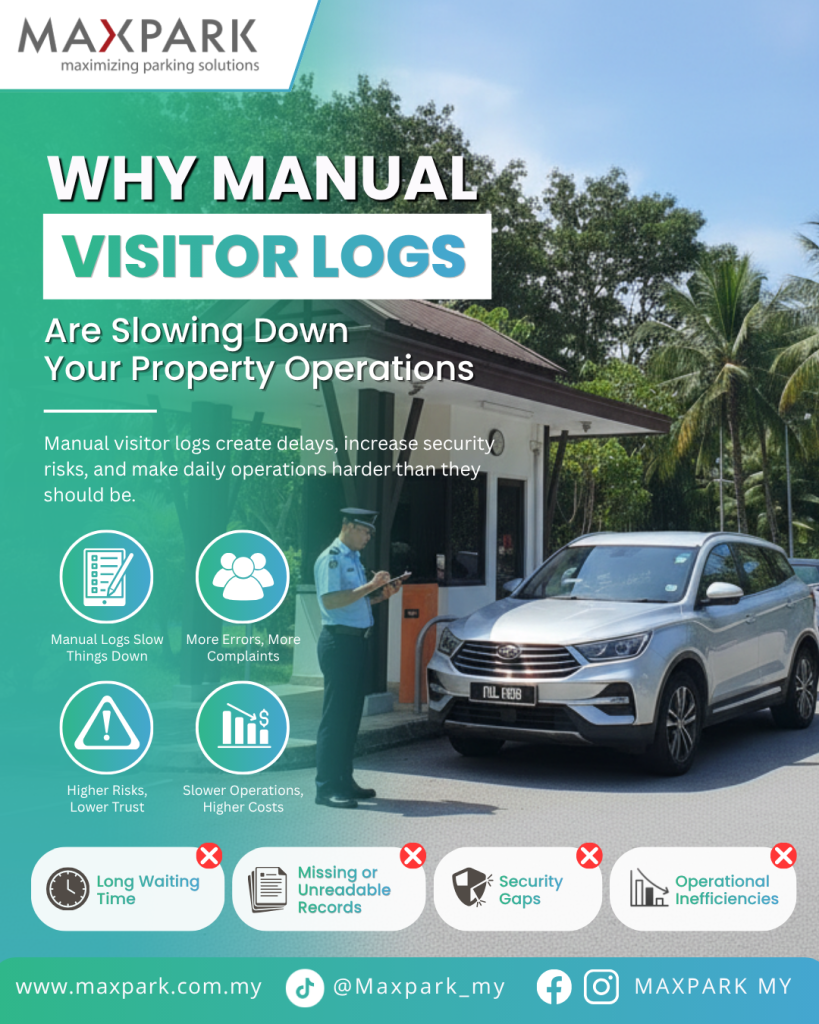
Why Manual Visitor Logs Are Slowing Down Your Property Operations
Introduction
Many buildings still rely on manual visitor registration — a guardhouse, a pen, and a physical logbook.
It feels simple and familiar. But in modern residential and commercial properties, manual processes are quietly creating delays, operational inefficiencies, and unnecessary pressure on daily operations.
What worked years ago is no longer enough for today’s busy communities.

Small Delays Become Bigger Problems
Every visitor interaction affects the flow of your building.
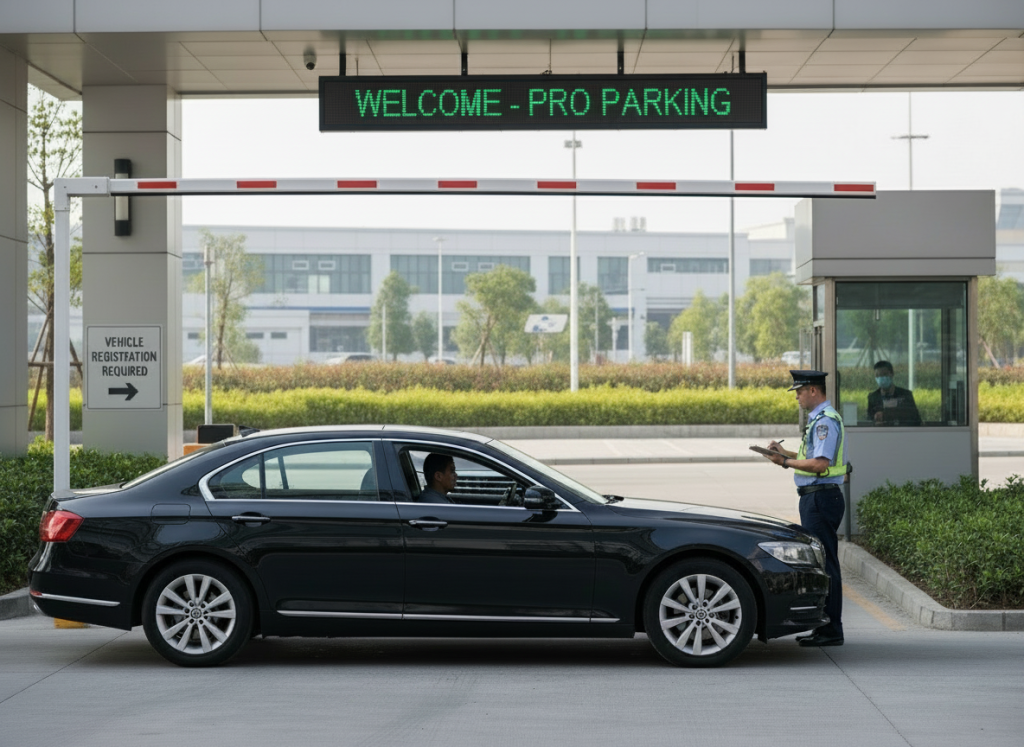
Delivery riders arrive during peak hours. Guests queue at the entrance. Guards manually record IC numbers, vehicle plate numbers, and unit details while managing multiple vehicles at once.
Each interaction may only take a few minutes, but across hundreds of visitors every week, those delays quickly add up.
The result:
- Longer waiting times
- More interruptions for residents
- Higher pressure on guards
- Slower daily operations
Your entrance should keep people moving — not slow them down.
Manual Logs Create Operational Blind Spots
The problem with paper records is not just speed — it’s visibility.
Manual logs are difficult to search, easy to miss, and often incomplete. When management teams need to review visitor history or verify entries, the process becomes time-consuming and unreliable.
Common issues include:
- Unreadable handwriting
- Missing visitor details
- Incomplete records
- Delayed reporting
- No real-time visibility
Over time, this reduces operational efficiency and weakens overall security confidence.

Residents Expect Faster Experiences
In 2026, convenience is no longer a luxury — it’s expected.
Yet many buildings still require visitors to stop at guardhouses, fill in details manually, and wait for approval calls before entry.
The experience immediately feels outdated.
Modern residents expect visitor entry to be:
- Fast
- Smooth
- Secure
- Professionally managed
Buildings that fail to improve this experience risk falling behind expectations.

Guards Should Focus on Security, Not Paperwork
When guards spend most of their time handling logbooks and approval calls, less attention is given to actual security monitoring.
Manual admin tasks create unnecessary stress, slow down operations, and increase the risk of human error.
This is where automation makes a real difference — reducing repetitive tasks so guards can focus on real security responsibilities and incident management.

Why Digital and LPR/ANPR-Based Systems Work Better
Modern visitor management is shifting toward automated and digital-first systems, including ANPR/LPR (Automatic Number Plate Recognition) technology.
With solutions like MaxPark’s smart parking and access ecosystem, properties can streamline entry without relying on manual registration.
These systems help:
- Reduce waiting times at entry points
- Enable faster, touchless vehicle access
- Automatically capture and store visitor data
- Improve traceability and audit readiness
- Reduce workload for guards and management teams
With ANPR/LPR, vehicles are identified automatically, allowing smoother entry flow and stronger operational control.
Smarter Buildings Start at the Entrance
Many buildings try to solve congestion by adding more manpower.
But the real issue is often the workflow itself.
Smarter entry systems improve movement, reduce friction, and create better operational visibility from the moment someone arrives at your property.
Because modern building operations should feel seamless — not manual.
Make Visitor Entry Faster and Smarter
Moving away from manual visitor logs is more than just a convenience upgrade — it’s a necessary step for modern property operations. Paper-based systems create delays, increase workload for guards, and reduce visibility for management, especially as visitor volume continues to grow.
With digital and ANPR/LPR-based solutions, entry points become faster and more accurate. Visitors move in with less waiting time, guards spend less time on paperwork, and management gains real-time visibility of activity. The overall result is a smoother, more controlled, and more efficient entrance experience.
This is where MaxPark helps transform traditional entry systems into smarter, automated workflows. By integrating intelligent parking and access management technology, MaxPark reduces congestion, improves operational efficiency, and enhances both security and user experience.
Ultimately, smarter entry systems are not just about replacing manual logs — they are about creating a seamless first impression for every visitor while improving how the entire property operates day to day.
Get an appointment
MAXPARK PARKING SOLUTIONS

Products
Solutions
Solutions
- Cashless Parking System - Touch 'N Go & PayWave
- Parking Guidance System (PGS)
- Vehicle Counting System (VCS)
- Discount Validator System