
The difference between smart parking and traditional parking is quite clear. While traditional parking is still common in many places, smart parking is gradually asserting its position as a smarter and more modern solution, helping to save space, increase safety, and enhance the user experience..
The Difference Between Smart Parking and Traditional Parking
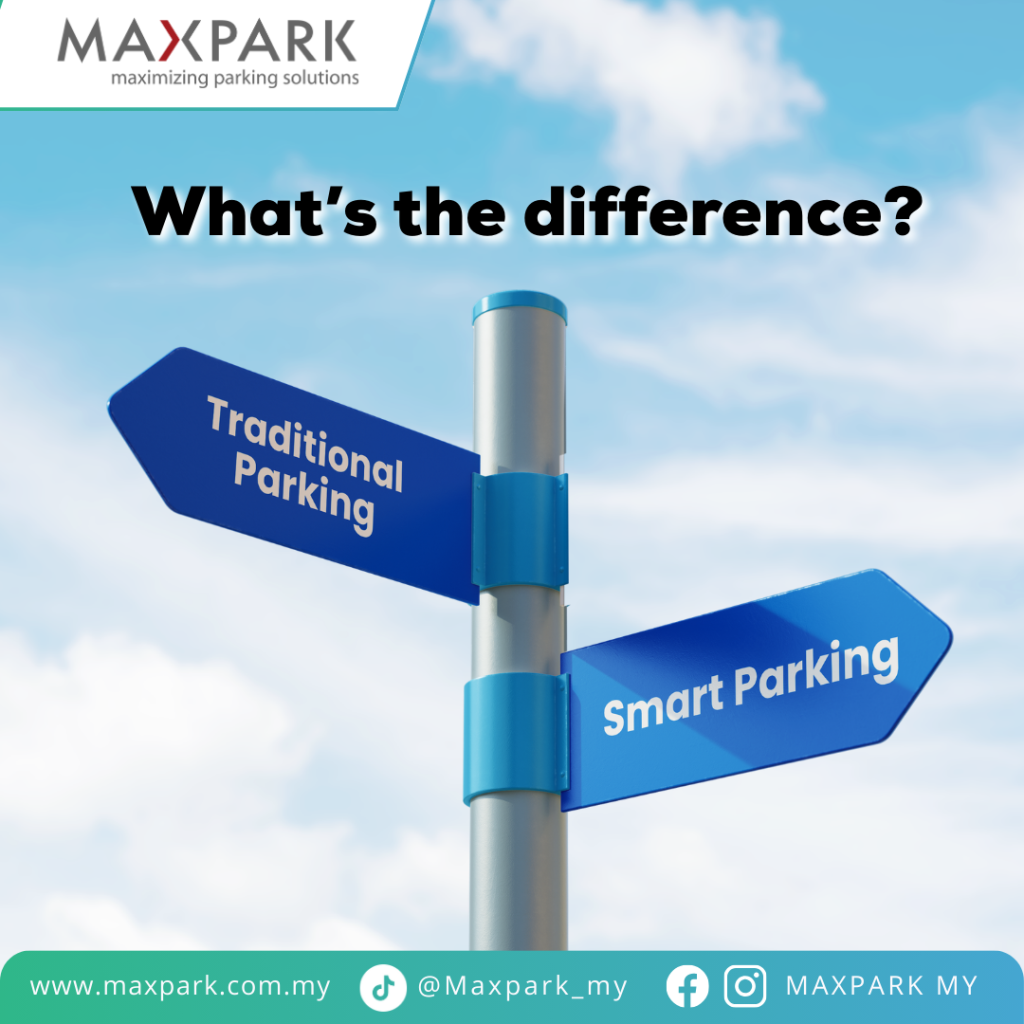
The Difference Between Smart Parking and Traditional Parking
With the continuous development of technology, automated parking systems are becoming a breakthrough solution for managing and operating parking lots, especially in densely populated urban areas. However, to better understand the benefits of automated parking, we need to compare it with traditional parking methods to see the clear differences between the two.
1. Concept of Smart Parking and Traditional Parking
Traditional Parking: Traditional parking relies entirely on manual driving. The driver navigates, finds a spot, and parks the vehicle themselves. This method requires wider aisles and larger open spaces to allow for vehicle maneuvering, which can reduce space efficiency and increase congestion.
Smart Parking: Smart Parking utilises sensors, digital management systems, and sometimes semi-automated guidance to streamline the parking process. Drivers are guided to available spots through real-time monitoring, reducing the need to search manually. In some systems, vehicles may be directed or positioned with minimal driver effort, improving efficiency and convenience.
2. Differences in Space Utilization
Traditional Parking: Requires broad lanes between parking rows to allow cars to enter, exit, and reverse. This layout consumes large physical space and often results in under-utilised land, especially in high-demand urban areas.
Smart Parking: Optimises space by guiding vehicles to available bays efficiently. With digital allocation and better organisation, Smart Parking can increase parking capacity without expanding land usage. Multi-level management and compact layout planning can save significant space — ideal for congested zones like business districts, malls, and apartment complexes.
3. Vehicle Retrieval Process
Traditional Parking: Drivers must locate their vehicle and navigate out of the lot themselves. This can be challenging during peak hours or when cars are closely packed, often leading to delays.
Smart Parking: Retrieval is simplified with digital tracking. Users can locate or request their vehicle within the system, and navigation assistance directs them out efficiently. No more wandering through rows or searching for misplaced vehicles — the system tells you exactly where your car is.
4. Safety and Vehicle Protection
Traditional Parking: Manual maneuvering increases the chance of dents, scratches, and collisions. Public lots may expose vehicles to theft, vandalism, or weather damage.
Smart Parking: Enhanced monitoring, sensor-based guidance, and controlled parking zones significantly reduce the risk of accidents. With CCTV, security integration, and safer parking arrangements, cars remain better protected from damage and external threats.
5. Time Efficiency
Traditional Parking: Finding a spot can take a long time, especially in crowded places. Queueing, circling, or reversing repeatedly wastes time and fuel.
Smart Parking: Designed for speed. Real-time spot detection shortens parking and retrieval time, helping users get in and out faster. Centralized system control ensures no time is wasted searching.
6. Convenience and Technology
Traditional Parking: Offers minimal support — the process depends entirely on the driver’s skill, visibility, and luck in finding an open space.
Smart Parking: Built with modern technology such as IoT sensors, AI-based monitoring, payment integration, and even EV charging compatibility. Additional features like license plate recognition, guided navigation, and automated barriers enhance convenience and user experience.
7. Installation and Operation Costs
Traditional Parking: Requires lower initial setup cost but demands large land areas and ongoing manpower for security, ticketing, and management. Long-term operational expenses can be high.
Smart Parking: Higher initial investment due to technology, sensors, and system integration. However, it becomes more cost-efficient over time by reducing manpower needs, improving space utilization, and streamlining management.
8. Environmental Impact
Traditional Parking: Drivers circle around looking for spots, causing unnecessary fuel consumption and emissions — especially during peak hours.
Smart Parking: Minimizes emissions by reducing vehicle movement inside the parking area. Faster parking and organized allocation contribute to a cleaner, more sustainable environment.
9. Applications and Future Trends
Traditional Parking: Works best in locations with ample space and low demand for technological management or efficiency.
Smart Parking: Represents the next evolution in parking infrastructure. Increasingly adopted in major cities, corporate buildings, airports, hospitals, residential complexes, and commercial centres. As electric vehicles become mainstream, Smart Parking systems continue to evolve to support charging, automation, and real-time digital management.
Conclusion
Get an appointment
MAXPARK PARKING SOLUTIONS
MaxPark is a recognized leader in the field of parking management solutions in Asia Pacific for more than 30 years and ISO 9001 certified.

MaxPark, a recognized leader in parking management solutions in the Asia Pacific for over 30 years, is proud to be ISO 9001 certified. Additionally, we are certified TNG system integrators, ensuring top-quality service and expertise in our industry-leading solutions.
Products
Solutions
Solutions
- Cashless Parking System - Touch 'N Go & PayWave
- Parking Guidance System (PGS)
- Vehicle Counting System (VCS)
- Discount Validator System
Copyright © 2023 MaxPark, All rights reserved.